

Top 5 Sources of VOCs in Homes
Indoor air can be up to 10 times more polluted than outdoor air, largely due to Volatile Organic Compounds (VOCs). Found in common household products, VOCs release harmful gases that can cause short-term irritation and long-term health risks like central nervous system damage. Here are the main culprits and how to reduce exposure:
- Cleaning Products: Emit chemicals like ammonia, acetone, and formaldehyde. Opt for natural alternatives like vinegar or baking soda.
- Paints and Solvents: Release benzene, toluene, and formaldehyde. Use low-VOC paints and ventilate during and after painting.
- Furniture and Building Materials: Composite wood and synthetic materials off-gas formaldehyde and phthalates. Choose solid wood furniture or let new items air out.
- Personal Care Products and Air Fresheners: Contain hidden VOCs like acetone and toluene. Go for fragrance-free, low-VOC options.
- Hobby Supplies and Stored Fuels: Glues, markers, and fuels release benzene and acetone. Store them outside and use safer alternatives.
Quick Tip
Improve air quality by using ventilation, reducing VOC sources, and considering air filters with activated carbon for added protection.
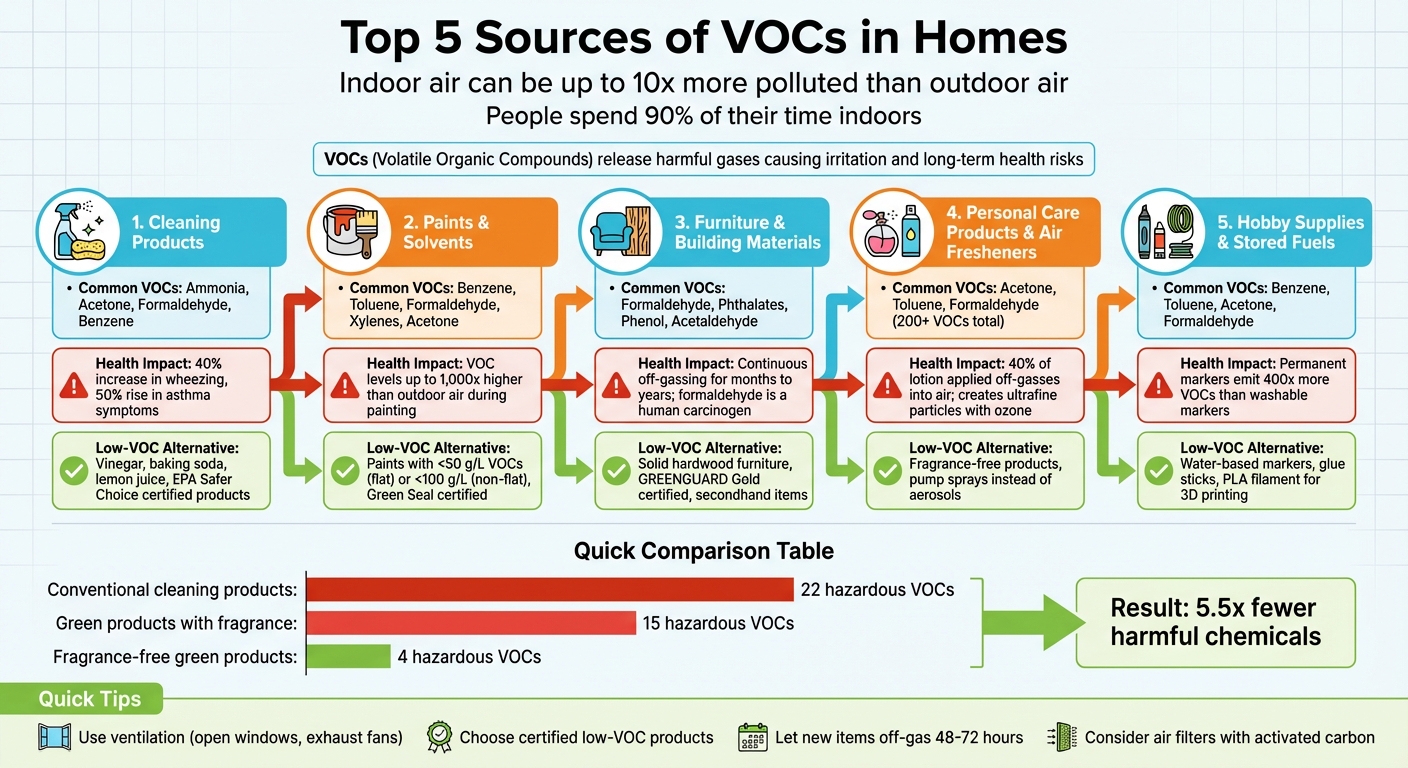
Top 5 VOC Sources in Homes and How to Reduce Exposure
What Are VOCs? | 5 VOC Sources Inside Your Home
1. Cleaning Products
Household cleaners are a common source of VOCs (volatile organic compounds) in many American homes. These products often contain chemicals like isopropyl alcohol, acetone, ammonia, formaldehyde, and benzene, which can evaporate into the air during use. Even disinfectants and sterilants may release compounds such as glutaraldehyde and ethylene oxide. Surprisingly, even products marketed with "fresh" scents may include artificial citrus or pine fragrances, which are also VOCs.
Common VOCs Emitted
Different types of cleaning products release a variety of VOCs. Disinfectants, for example, emit chemicals like ammonia, bleach, and chloramines. Solvents and sprays often release isopropyl alcohol, acetone, ethylene glycol, limonene, terpenes, and formaldehyde. Studies have shown that frequent use of glass and furniture sprays can nearly double the risk of developing physician-diagnosed asthma.
Health Risks Associated
Using cleaning sprays regularly has been linked to a 40% increase in wheezing and a 50% rise in asthma symptoms. These VOCs can cause immediate irritation and, over time, may harm the liver, kidneys, and central nervous system. Children are particularly at risk due to their higher relative air intake compared to adults.
One critical safety tip: never mix bleach with ammonia. Doing so can create chlorine gas, which is highly toxic.
Tips to Reduce Exposure
To minimize exposure to VOCs, consider switching to natural alternatives like baking soda, vinegar, lemon juice, and water. If you use commercial cleaners, take steps to improve ventilation by opening windows or using exhaust fans. Look for products labeled as "low-VOC" or certified by EPA Safer Choice. Always store cleaning supplies in well-ventilated areas and ensure containers are tightly sealed. Pairing these habits with an effective filtration system can further improve indoor air quality.
Relevance of Air Filtration Solutions
While proper ventilation and reducing VOC sources are essential, air filtration systems with activated carbon filters - such as ElectroDust filters - can play a critical role in neutralizing VOCs and maintaining cleaner indoor air.
2. Paints and Solvents
Paints, varnishes, and solvents are some of the biggest sources of VOCs in American households. These products often use petroleum-based chemicals to dissolve ingredients and speed up drying times. Even after paint feels dry to the touch, it can continue releasing vapors for several days as it cures. What's more, sealed containers can still leak gases, allowing harmful compounds like benzene to circulate in the air - especially when stored in basements or attached garages. This sets the stage for understanding the specific chemicals involved and the risks they pose.
Common VOCs Emitted
Paint products release a cocktail of chemicals, including toluene, benzene, methylene chloride, xylenes, formaldehyde, and acetone. For instance, methylene chloride - commonly found in paint strippers - can break down into carbon monoxide, while benzene is a known carcinogen. Adding colorants to so-called "low-VOC" base paints can also significantly increase VOC levels, often surpassing the advertised limits.
Health Risks Associated
"Concentrations of many VOCs are consistently higher indoors (up to ten times higher) than outdoors." – US EPA
Painting or stripping paint can cause VOC levels to skyrocket - up to 1,000 times higher than typical outdoor levels. Short-term exposure to these chemicals can lead to symptoms like eye and throat irritation, headaches, dizziness, nausea, and even difficulty with coordination. Over time, prolonged exposure can harm the liver, kidneys, and central nervous system. Those most at risk include children, seniors, and people with asthma or COPD.
Tips to Reduce Exposure
- Choose certified low-VOC or zero-VOC paints: Look for certifications from Green Seal or GreenGuard, and check the Safety Data Sheet for VOC levels. Flat paints should have fewer than 50 grams per liter of VOCs, while zero-VOC options must stay under 5 grams per liter.
- Ventilate properly: Use window-mounted box fans to direct fumes outside for at least 48 to 72 hours after painting.
- Buy only what you need: Avoid storing partially used paint cans that could leak over time.
- Limit exposure for vulnerable groups: Keep pregnant women, young children, and pets away from freshly painted areas for at least 72 hours.
- Dispose of paint responsibly: Take unused paint to local hazardous household waste programs instead of throwing it in the trash.
For added protection, consider using air filtration systems like ElectroDust filters to further reduce VOC levels indoors.
Relevance of Air Filtration Solutions
Beyond ventilation and limiting VOC sources, air filtration systems can play a key role in improving indoor air quality. Standard HVAC systems often recirculate air without effectively removing VOCs. However, systems with activated carbon filters can help neutralize paint fumes and other harmful gases. ElectroDust filters, in particular, capture airborne particles - including VOC residues - offering an extra layer of protection when paired with proper ventilation and source control efforts.
3. Furniture and Building Materials
Furniture and building materials often play a significant role in contributing to VOC emissions. While paints and cleaning products may off-gas relatively quickly, materials like composite wood and synthetic furniture can continue releasing VOCs for months - or even years - after installation.
Common VOCs Emitted
One of the most prevalent VOCs in building materials is formaldehyde, which is commonly found in composite wood products like plywood, particle board, and medium-density fiberboard (MDF). These materials are bonded with adhesives that emit formaldehyde, acetaldehyde, phenol, and methylene chloride. Polyurethane foam, used in mattresses and couch cushions, releases toluene and other semi-volatile organic compounds. Flooring materials such as vinyl, laminate, and carpet contribute additional VOCs, including formaldehyde, phthalates, ethylbenzene, and carbolic acid. Even adhesives used for tiles and cabinetry can add to the overall VOC levels in a home.
| Material Category | Common VOCs Emitted | Specific Sources |
|---|---|---|
| Composite Wood | Formaldehyde, Phenol, Acetaldehyde | Cabinets, shelving, MDF, particle board |
| Flooring | Phthalates, Ethylbenzene, Formaldehyde | Vinyl, laminate, carpet backing, adhesives |
| Furniture Padding | Toluene, Polyurethane, PBDEs (older items) | Mattresses, sofas, foam cushions |
| Insulation | Methylene chloride, Polystyrene | Fiberglass, spray foam, rigid foam boards |
Health Risks Associated
The constant release of VOCs from these materials can create prolonged exposure risks. Formaldehyde, for example, is classified as a human carcinogen and can cause irritation to the eyes and throat. Long-term exposure to VOCs may also harm critical organs like the liver, kidneys, and central nervous system. Vulnerable populations, such as children and older adults, are especially at risk.
Tips to Reduce Exposure
- Opt for solid hardwood furniture. Solid wood emits far fewer VOCs than composite wood products.
- Check for certifications. Look for products certified by GREENGUARD Gold or STANDARD 100 by OEKO-TEX, which ensure lower chemical emissions.
- Let new items off-gas. Place new furniture or materials in a well-ventilated area for 48–72 hours before bringing them inside.
- Buy secondhand when possible. Used furniture has already off-gassed most of its VOCs.
- Seal composite wood surfaces. If removing a VOC source isn’t an option, applying a sealant can help reduce emissions.
Relevance of Air Filtration Solutions
Good ventilation is key to reducing VOC exposure. While standard HVAC filters are effective at capturing particles, they don’t trap gases. For better indoor air quality, consider combining proper ventilation with high-quality particulate filters, such as those offered by ElectroDust. These filters are designed to capture dust, allergens, and other airborne particles that may carry VOC residues. Together with source control, these measures can help create a healthier indoor environment.
sbb-itb-adeab55
4. Personal Care Products and Air Fresheners
Just like cleaning supplies and paints, personal care products and air fresheners play a big role in increasing indoor VOC levels. Everyday items like grooming products and home fragrances release more than 200 VOCs into the air. Since these products are often applied directly to the body or sprayed near the face, the risk of immediate inhalation is much higher. Here’s a closer look at the common compounds they emit and the potential health concerns.
Common VOCs Emitted
Scented products are particularly concerning because they can release over 100 different VOCs, many of which don’t appear on ingredient labels. Products like hair sprays, lotions, baby wash, perfumes, deodorants, nail polish, and air fresheners are common culprits. The problem worsens when these VOCs interact with indoor ozone (which can come from outdoor air or office equipment like printers). This reaction creates secondary pollutants and ultrafine particles capable of deeply penetrating the lungs.
| Product Category | Common VOCs Emitted | Potential Health Risks |
|---|---|---|
| Nail Products | Acetone, Toluene, Formaldehyde | Headaches, dizziness, eye/throat irritation |
| Hair Care (Sprays/Dyes) | Methylene chloride, Toluene, Acetone | Respiratory issues, central nervous system effects, brain damage |
| Deodorants & Sunscreens | Benzene, Methylene chloride | Cancer risk, respiratory irritation |
| Lotions & Creams | Isopropyl alcohol, Formaldehyde | Skin and lung irritation |
| Air Fresheners | Fragrance compounds, Formaldehyde (secondary) | Asthma worsening, nausea, fatigue |
A 2024 study from EPFL revealed that common European personal care products emit over 200 VOCs. When ozone is introduced, ultrafine particles form at levels similar to those in heavily polluted urban environments.
Health Risks Associated
Exposure to these VOCs can lead to both short-term and long-term health effects. Immediate symptoms include irritation of the eyes, nose, and throat, as well as headaches, nausea, and dizziness. Over time, exposure may harm the central nervous system, liver, and kidneys, and even increase the risk of cancer. Vulnerable groups, such as children, older adults, and people with asthma or COPD, are especially at risk. Notably, around 40% of the lotion applied to the skin eventually off-gasses into indoor air.
"Some molecules 'nucleate' - in other words, they form new particles that can coagulate into larger ultrafine particles that can effectively deposit into our lungs." - Dusan Licina, Assistant Professor, EPFL
Tips to Reduce Exposure
To minimize exposure, look for products labeled "low VOC" or "VOC-free" and choose fragrance-free versions whenever possible. Since regulations don’t require manufacturers to list all ingredients used in "fragrances", many VOCs remain undisclosed. Reduce the use of aerosol products like hairspray or spray deodorants, as they tend to contain higher VOC levels. Opt for pump sprays or non-aerosol alternatives instead.
Improve ventilation by using exhaust fans, opening windows, or applying these products outdoors when possible. Store personal care items in tightly sealed containers and keep them in a ventilated cabinet or separate storage area, away from main living spaces.
Relevance of Air Filtration Solutions
As with other sources of VOCs, advanced air filtration systems can help reduce indoor VOC levels when combined with proper ventilation and source control. While air fresheners add VOCs to cover odors, effective air management can remove these contaminants. Standard HVAC filters only capture particles, not gases. For a more comprehensive approach, pair ventilation with high-quality particulate filters like ElectroDust’s washable, reusable filters. These filters trap dust, allergens, and particles carrying VOC residues, helping maintain cleaner indoor air while reducing waste.
5. Hobby Supplies and Stored Fuels
Garages and craft rooms often hide a surprising source of indoor air pollution: VOCs, or volatile organic compounds. Hobby supplies like glues, markers, spray paints, and 3D printing materials, along with stored fuels such as gasoline and kerosene, continuously release these chemicals into the air. Let’s break down what emits VOCs, the risks they pose, and how to minimize your exposure.
Common VOCs Emitted
Hobby materials are a major contributor to indoor VOC levels. For example, permanent and dry-erase markers emit up to 400 times more VOCs than washable markers or highlighters. Adhesives like rubber cement and epoxies release harmful compounds such as formaldehyde, benzene, toluene, and acetone. Other culprits include aerosol spray paints, photographic solutions, and ABS filament used in 3D printing. Some materials, like epoxies, can continue off-gassing VOCs for weeks after use.
Stored fuels are another concern. Gasoline, kerosene, and automotive fluids (like antifreeze and windshield wiper fluid) release chemicals such as benzene - a known carcinogen - toluene, and styrene. Even sealed containers can leak gases, especially in warmer temperatures.
| Product Category | High-VOC Option | Low-VOC Alternative |
|---|---|---|
| Markers | Permanent or Dry-Erase | Water-based, unscented markers or crayons |
| Adhesives | Rubber cement, epoxies, spray glue | Glue sticks, white wood glue, or tape |
| Paints | Petroleum-based or aerosol sprays | Water-based craft paints |
| 3D Printing | ABS filament | PLA or other low-emission filaments |
Health Risks Associated
Exposure to VOCs can lead to a variety of health problems. Short-term effects include irritation of the eyes, nose, and throat, as well as headaches, dizziness, nausea, and even loss of coordination. Some people may also develop allergic skin reactions or respiratory issues. Over time, prolonged exposure can harm the liver, kidneys, and central nervous system, and may even contribute to certain cancers and pulmonary diseases.
One particularly dangerous VOC is methylene chloride, found in some adhesive removers and aerosol paints. When inhaled, it converts to carbon monoxide in the body and has been linked to cancer in animal studies. Children are especially vulnerable, and certain projects can cause sudden spikes in VOC levels.
Tips to Reduce Exposure
Here are some practical ways to limit your exposure to VOCs:
- Store fuels, oils, and unused chemicals in a detached garage or outdoor shed, away from your living space.
- Buy only what you need to avoid long-term storage of high-VOC products.
- Opt for safer alternatives like water-based markers, glue sticks, and craft paints instead of their high-VOC counterparts.
- Work in well-ventilated areas by opening windows and using exhaust fans. For high-VOC activities like spray painting or using epoxy resin, work outdoors whenever possible.
- After finishing a high-VOC project, try a “bake-out” method: heat the room to over 80°F with windows open for several hours to speed up off-gassing.
"The best way to address VOCs in the home is to completely eliminate the use of products and materials that contain VOCs – if they aren't in the home, they can't harm you." - Editorial Staff, American Lung Association
Relevance of Air Filtration Solutions
While source control is key, air filtration can help support cleaner indoor air. Standard HVAC filters are designed to trap particles, not gases. However, advanced filters like ElectroDust's washable, reusable furnace filters can capture particles that may carry VOC residues. Although these filters don’t directly remove gaseous VOCs, they work alongside proper ventilation and source control to improve air quality. Plus, their reusable design cuts down on waste, making them a more environmentally friendly choice for households looking to breathe easier.
Comparison Table
Switching to low-VOC products can drastically reduce indoor air pollution. For example, conventional cleaning products release an average of 22 VOCs, while fragrance-free green alternatives emit just 4 - meaning they release 5.5 times fewer harmful chemicals.
As mentioned earlier, paints, cleaning supplies, and furniture are some of the biggest contributors to VOC emissions indoors. The table below highlights how low-VOC alternatives can help reduce these emissions. For paints, flat finishes qualify as low-VOC if they contain fewer than 50 grams of VOCs per liter, while zero-VOC options contain fewer than 5 grams per liter. Non-flat paints, such as satin or semi-gloss, must stay under 100 grams per liter to meet low-VOC standards.
| Product Category | Standard Product | Low-VOC Alternative | Key Difference |
|---|---|---|---|
| Flat Paints | High solvent content; strong odor | Water-based; < 50 g/L VOCs | Reduces respiratory irritation and toxin buildup |
| Non-Flat Paints | High solvent content; strong odor | Water-based; < 100 g/L VOCs | Avoids petroleum-based solvents |
| Cleaning Products | Avg. 22 hazardous VOCs | Avg. 4 hazardous VOCs (fragrance-free) | Releases 5.5 times fewer harmful chemicals |
| Furniture | Plywood/particle board (formaldehyde) | Solid hardwood; used furniture | Limits long-term formaldehyde off-gassing |
| Aerosols | Butane/propane propellants | Pump sprays; solid/liquid forms | Eliminates hydrocarbon propellants |
| Flooring | New carpet (off-gasses for 5+ years) | Natural stone, tile, or solid wood | Prevents prolonged chemical emissions |
It’s important to note that paint labels often don’t account for VOCs added through colorants during tinting. These can increase total VOC levels by as much as 50 grams. When purchasing paint, ask the retailer for the final VOC count after tinting. Additionally, look for certifications like Green Seal, GreenGuard, or Eurofins to ensure the product meets low-emission standards.
"On average, the study found fragrance-free 'green' products emitted four chemicals classified as hazardous, compared to about 15 in 'green' products with fragrance and 22 in 'conventional' cleaning products." - Sarah Lynch Baldwin, Editor
Conclusion
Indoor VOC sources - like cleaning products, paints, furniture, personal care items, and hobby supplies - can push indoor pollutant levels 2–5 times higher than outdoor air. Considering that people spend about 90% of their time indoors, reducing exposure to these pollutants is crucial for maintaining your family’s health.
Identifying these sources is the first step toward minimizing exposure. Opt for low-VOC or VOC-free options, such as solid wood furniture, water-based paints, and unscented cleaners. Tackling VOCs at the source is the most effective way to protect your indoor air.
Ventilation also plays a key role. Open windows, use exhaust fans, and allow new items to off-gas in well-ventilated spaces for 7–10 days.
FAQs
How can I tell if VOC levels in my home are high?
You can spot high VOC levels by using VOC sensors or TVOC monitors to measure indoor air quality. Physical symptoms such as headaches, dizziness, or respiratory irritation might also signal elevated VOCs, especially if these symptoms ease with better ventilation. Keeping an eye on air quality and ensuring proper airflow are essential steps to reduce exposure.
Do air purifiers or HVAC filters actually remove VOCs?
Yes, air purifiers and HVAC filters can play a role in reducing VOCs (volatile organic compounds) in indoor air. How well they work largely depends on the type of technology they use. High-efficiency filters, like those with activated carbon or other specialized materials, are better equipped to trap VOCs and other pollutants. Using these can make a noticeable difference in improving indoor air quality.
How long do new furniture and building materials off-gas VOCs?
New furniture and building materials can release VOCs (volatile organic compounds) into the air for months or even years. Items like composite wood products, paints, and finishes are common culprits, often emitting these compounds long after their initial use. To minimize exposure, ensure proper ventilation in your space and consider using air filtration systems to help improve indoor air quality over time.